
SMS Pumping Fraud: How Route Testing Exposes Artificially Inflated Traffic
By Saad ·
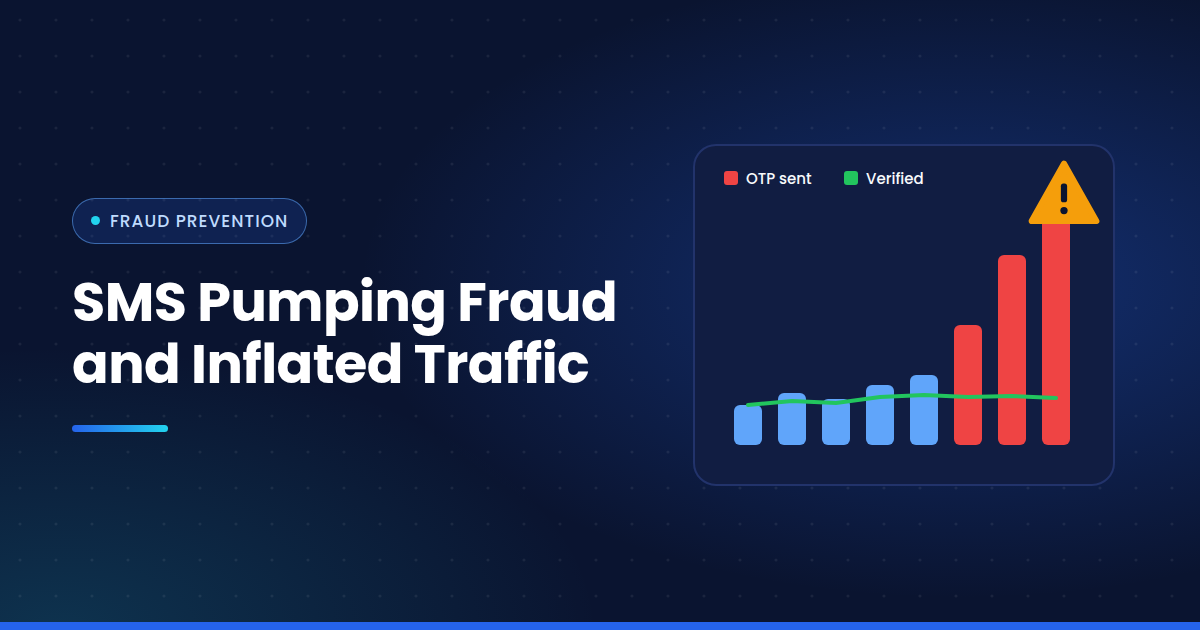
Your SMS bill doubles overnight. Sign-ups look busy. But nobody is actually finishing registration.
That pattern has a name. SMS pumping fraud, also called artificially inflated traffic or AIT SMS, is one of the most expensive problems in OTP messaging. Because it hides inside normal-looking traffic, it often runs for weeks before anyone spots it.
How SMS Pumping Works
The idea is simple, which is part of why it spreads so fast.
Fraudsters find a form on your site or app that triggers an SMS. Usually a sign-up page, a login screen or a "send me a code" button.
Then they use bots to request messages to large batches of numbers they control or have arranged deals on.
Those numbers are often high cost destinations, sometimes called premium numbers. Each message you send creates a termination fee. Somewhere in the chain, a party in on the scheme takes a revenue share of that fee.
You pay for every message. They get a cut. The code is never used.
That's why it's also known as SMS toll fraud or traffic pumping.
Warning Signs
AIT rarely looks like an attack. It looks like growth, until you check the details.
Sudden spikes in OTP requests to countries you don't normally serve
Batches of numbers in sequence, or sharing the same prefix
A falling conversion ratio, where codes are sent but never entered
A rise in bot signups that never complete a profile
SMS spend climbing faster than real user growth
Any one of these deserves a look. Together, they point strongly to fraudulent OTP requests.
Where Route Testing Fits In
Here's the question teams struggle with during a spike. Are codes not being entered because of fraud, or because they aren't arriving?
The answer changes everything. If messages aren't reaching people, you have a delivery problem and need a better route. If they're arriving fine and still going unused, you're probably looking at pumping.
Real SIM testing gives you that answer. Send test messages through the same route to physical SIMs in the affected country, and see whether delivery is healthy.
If the route delivers quickly and reliably on real handsets, and conversion in that country still sits near zero, the traffic itself is the problem.
Testing also shows whether your vendor's delivery reports line up with reality. Inflated volumes paired with fake receipts can hide what's really going on.
How to Reduce the Damage
Testing tells you what's happening. These steps help stop it.
Rate limiting. Cap how many codes one number, IP address or device can request in a set time.
Geo controls. Block or add checks for countries you don't serve.
Conversion monitoring. Track sent versus verified codes per country, and alert when the ratio drops.
Bot checks. Add a CAPTCHA or similar step before the SMS is sent, especially on sign-up forms.
Vendor conversations. Ask your provider which fraud controls they offer on their side.
Stopping the Cost Leakage
The longer pumping runs, the more it costs. Cost leakage from AIT can quietly eat into a messaging budget for months.
Pair good fraud controls with regular route testing. When numbers look strange, you'll quickly tell a delivery fault from fraud, and fix the right one.
How Messeo Helps
Messeo gives you a physical SIM base in multiple countries and side by side route comparison. When traffic spikes in a market, you can confirm fast whether messages are landing properly and whether receipts match reality.
That clarity helps you respond sooner and stop paying for messages nobody needs. Fraud thrives on confusion. Clear data takes that away.